Laikipia Safari Wild Dogs: Best Time to See Packs
African wild dogs are among the hardest large carnivores to find on a Kenya safari. A Laikipia safari wild dogs trip is really about movement and pack behavior. You track a family, you respect denning areas, and you rely on guides who understand the land. This guide explains where to look, how tracking works, and the honest best time to try.
Are Wild Dogs Found in Laikipia?
Yes. African wild dogs live across Laikipia’s private ranches, conservancies and community lands, and several packs are monitored in the wider ecosystem. Sightings are never guaranteed because packs can travel across very large territories, but Laikipia offers unusually strong opportunities through low-density tourism, active monitoring and flexible tracking.
Wild dogs are not like lions that often stay in one small pride area for weeks. A pack in Laikipia can rest in one place for a few days and then cross into a neighboring ranch overnight. They follow prey, rainfall and denning needs. So when a guide says wild dogs are present in Laikipia, that is true for the whole landscape, not for one exact map point.
Why Is Laikipia One of the Best Places for Wild Dogs in Kenya?
Laikipia combines extensive connected habitat, relatively few safari vehicles, collared individuals and guides who can use tracking data alongside spoor and recent sightings. Some private and community conservation areas also allow off-road driving, walking or later activities where local rules permit. This can create more focused encounters than a crowded standard game drive.
Kenya’s best-known parks offer classic game viewing, but African wild dogs in Kenya can be hard to find where vehicle pressure is high. Laikipia has a different mix. Wildlife shares space with cattle, farms and community land, and that working landscape is exactly why the dogs have room to move. The conservation model depends on private land owners and community groups choosing to protect habitat. You can see how that works in our guide to Laikipia safari conservation experiences.
Where Can You See Wild Dogs in Laikipia?
Good areas to investigate include Sosian Ranch, Laikipia Wilderness, Borana, Lewa, Loisaba, Suyian, Ol Pejeta and the Mpala research landscape. The best base depends on the pack’s current range, access rules and the camp’s monitoring relationships. Wild dogs cross conservancy and community boundaries rather than staying inside one tourist circuit.
The table below is a starting point, not a promise. Ask any operator for the pack’s most recent location before you commit to a camp.
| Area | Land type | Why visitors consider it |
|---|---|---|
| Sosian Ranch | Private ranch and conservancy | Quiet base with strong guiding and low vehicle numbers |
| Laikipia Wilderness | Private wildlife estate | Long-running wild dog activity and a strong walking tradition |
| Borana | Private ranch and conservancy | Sits close to Lewa, so packs can move across the boundary |
| Lewa | Private wildlife conservancy | Large protected landscape with detailed predator monitoring |
| Loisaba | Private wildlife conservancy | Open country with links to community land and wide pack movements |
| Suyian | Private conservation ranch | Low-volume option in the same northern Laikipia network |
| Ol Pejeta | Private wildlife conservancy | Wild dogs occur, though the reserve is better known for rhinos |
| Community land and group ranches | Shared land outside individual conservancies | Denning and hunting areas where packs pass between protected blocks |
| Mpala | Working ranch and research landscape | Research projects help build a fuller picture of wild dog movements |
The list changes as packs move. A named conservancy can have excellent dog reports one month and no sightings the next. The smarter question is which pack is active during your travel dates, not which reserve has the best reputation.
Ol Pejeta can work well if you want to combine a wild dog search with rhinos or the chimpanzee sanctuary. Start with our advice on planning an Ol Pejeta safari. If you are travelling as a family, age limits and pricing can shape the plan. Check Ol Pejeta age and cost planning before mixing it with a wild dog area.
What Is the Best Time to See Laikipia Safari Wild Dogs?
Wild dogs can be seen year-round, but the strongest viewing often comes after pups leave the den and begin travelling with the adults, before the next denning cycle. June to October usually brings drier ground, clearer visibility and easier tracking, while green seasons can offer fewer visitors. Exact timing shifts by pack.
Denning cycles are not identical every year. Some Laikipia packs den in dry months; others time pups around local rainfall. A good camp will tell you where the pack is and whether pups are still at the den or already moving. The timing pattern below should shape your Laikipia safari wild dogs plan more than a fixed calendar date.
During the denning period, adult dogs leave to hunt and return to feed the pups. You may see adults coming and going, but the whole family stay close to the den. Once pups are old enough to travel, the pack becomes more visible during hunts, rest stops and greeting ceremonies. That is usually the most rewarding stage for a visitor.
How Does Laikipia Wild Dog Tracking Work?
Guides combine radio or satellite collar signals with vehicle-radio reports, fresh tracks, direct sightings and clues from pack behaviour. A tracking day may involve an early start, off-road driving, walking or staying out later where permitted. Collars improve the odds of locating a pack, but they do not make a sighting certain.
Satellite collars can send a location to researchers. Radio collars send a signal that a guide can follow with an antenna. But collars are not fitted to every pack member, and the signal only tells you where the dog was at the last update, not where it will be when you arrive.
The rest of tracking is reading the bush. Guides look for fresh paw prints on sandy roads, disturbed ground and the behaviour of prey animals. They also share reports with other camps. Laikipia wild dog tracking often works because several eyes are watching the same wide landscape, not because one driver has a magic map.
What Should You Know About Wild Dog Pack Behaviour and Pups?
African wild dogs are highly social, cooperative predators that rest together, greet energetically and hunt as a coordinated pack. During denning, adults range out to hunt and return to feed pups; after the young can travel, the entire family becomes more mobile. Their pack movements, den location and prey availability strongly influence what visitors see.
Pups are the emotional highlight of a wild dog sighting, but they are also the main reason guides stay cautious. If a vehicle crowd forms near a den, the pack may shift to a new den, which puts stress on the pups. Responsible operators keep their distance and keep visits short.
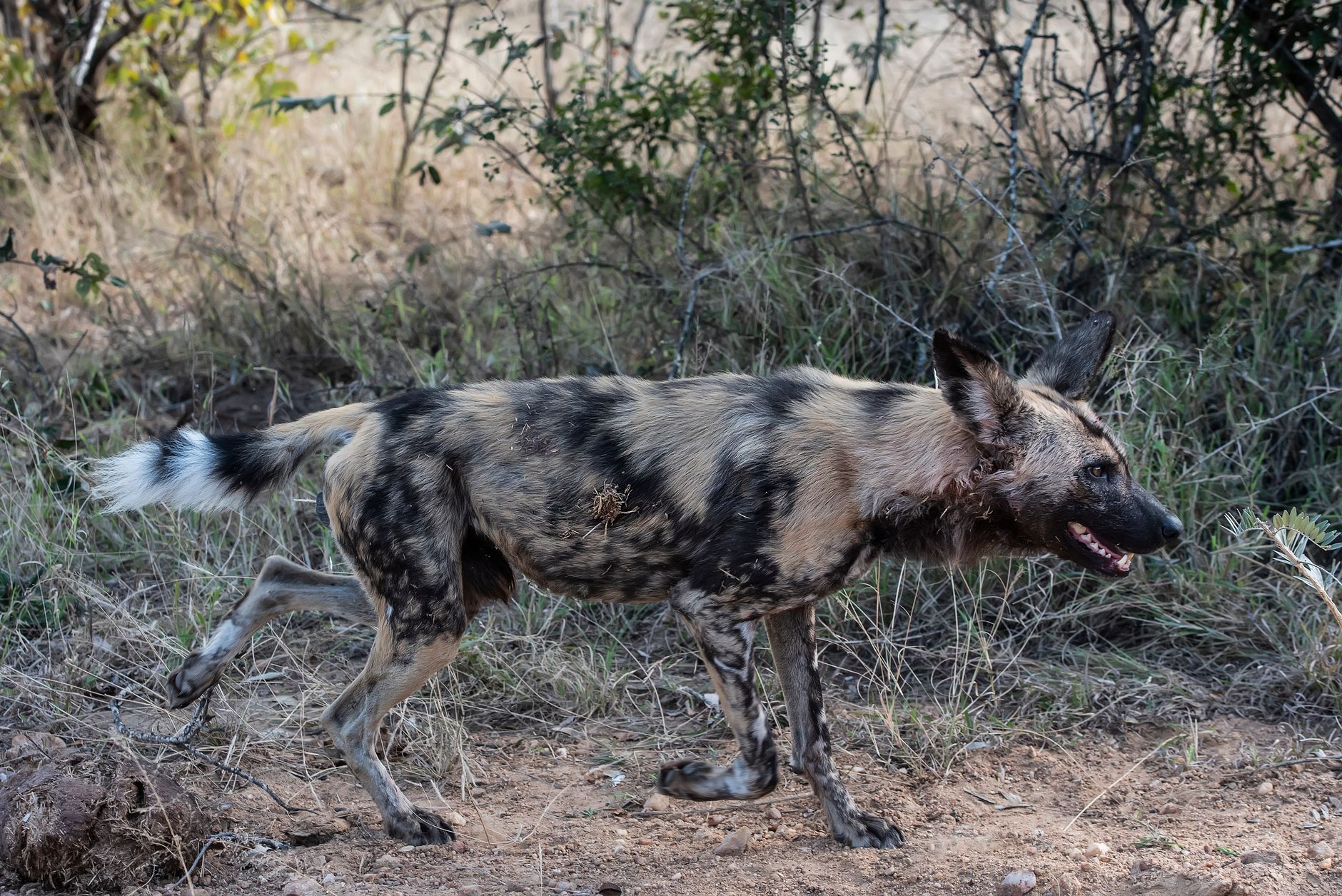
Do not confuse wild dogs with hyenas. Wild dogs have rounded ears, long legs and a blotched coat. Hyenas have heavier bodies, sloping backs and spotted or striped coats. Their social systems and calls are also different. If you hear a high, bird-like contact call, it is probably a wild dog, not a hyena.
Are African Wild Dogs Dangerous?
African wild dogs are not considered a threat to people on safari. They are wild predators and can be unpredictable, but attacks on humans are extremely rare. Guides keep a safe distance, and responsible operators avoid disturbing dens so the dogs do not feel trapped or cornered.
Respect still matters. Do not stand between a dog and its escape route. Keep noise low near a den. Let the guide read the pack’s mood. A dog that feels secure is far more likely to carry on resting, feeding pups or preparing for a hunt in front of you.
How Many Nights Should You Stay for a Laikipia Wild Dog Safari?
Plan at least three nights in one suitable Laikipia area, with four or five nights preferable for a trip centred on wild dogs. Packs may move beyond a camp’s operating zone or disappear for several days, so repeated morning and afternoon searches give guides more opportunities to combine collar information, spoor and fresh reports.
One-night stops are almost never enough. Even a full day with a collar signal can end without a sighting because the pack may have crossed into a place with no road access or into community land with different rules. Longer stays also give your guide time to learn the pack’s rhythm. On a four-night stay, the search feels less like a checklist and more like an expedition.
How Does Wild Dog Conservation Work in Laikipia?
Laikipia’s wild dogs survive in a working landscape where wildlife shares space with livestock, farms and community land. Projects such as the Samburu-Laikipia Wild Dog Project monitor packs and support coexistence, while conservancies use habitat protection, research and community partnerships to reduce conflict and maintain movement corridors.
Conflict with livestock is one of the biggest risks for wild dogs. When a pack kills a sheep or a calf, the owner may see the dogs as a direct threat to income. Conservation projects help communities build predator-proof livestock enclosures, vaccinate domestic dogs against diseases that can spread to wildlife, and collect better data on pack movements.
Tourism plays a part too. Conservancies need steady revenue to fund rangers, monitoring and community benefits. When visitors choose low-impact, well-guided camps, they help make wild dogs worth more alive than removed. You can explore this side of the trip with our Laikipia safari conservation experiences guide.
What Do Most Visitors Ask Before a Laikipia Wild Dog Safari?
Are There Wild Dogs in Laikipia?
Yes. Laikipia supports African wild dog packs across private conservancies, ranches and community land. They roam widely, so sightings are possible throughout the year but are never guaranteed.
What Is the Best Time to See Wild Dogs in Laikipia?
The strongest viewing is often after pups leave the den and start travelling with the pack. June to October can make tracking easier because conditions are generally drier and vegetation is more open, although pack movements matter more than any fixed month.
Where Can I See Wild Dogs in Kenya?
Laikipia is one of Kenya’s leading destinations, with opportunities in areas including Sosian, Laikipia Wilderness, Borana, Lewa, Loisaba, Suyian, Ol Pejeta and the Mpala landscape. The most suitable area changes with pack location and current monitoring information.
Can You Track Wild Dogs on Foot in Laikipia?
In some Laikipia conservancies and ranches, guided walking is possible and may form part of a wild dog experience. Whether guests can approach or follow a pack on foot depends on local rules, terrain, animal behaviour and the guide’s judgement. Responsible operators keep distance and avoid stressing denning animals.
How Many Nights Do I Need for a Wild Dog Safari?
Three nights is a practical minimum, while four or five nights gives a better chance of finding a mobile pack. Staying longer allows several tracking drives and reduces the risk that a temporary movement or poor weather defines the entire experience.
How Can You Compare Laikipia Wild Dog Safari Options?
Wild dogs move, and your plan should allow the same flexibility. When you are ready to build a Laikipia itinerary, compare safari operators on FindMySafari or browse packages through Valley Safaris. Look for a camp that shares current pack reports, respects denning sites and keeps the search patient. That approach gives you the best chance to watch one of Africa’s most fascinating predators on its own terms.
Where Can You Find More Safari Planning Resources?
- Kenya national parks map from SafariPure
- Ol Pejeta Conservancy guide from Trunktrails Safaris
- Ol Pejeta and Sweetwaters safari package from Valley Safaris
- Family safari collection on FindMySafari